If you run a SaaS company and you are wondering whether personal branding on LinkedIn is worth your time, here is the short answer. It works, but only if you stop posting about your software and start posting about the problem your software solves. Founders who do this consistently see far more reach and far more inbound interest than their own company page ever generates. The founders who post product screenshots and feature updates instead usually wonder why nobody engages.
I have written for enough SaaS founders now to know exactly where this goes wrong, and exactly where it works. Let me walk you through both.
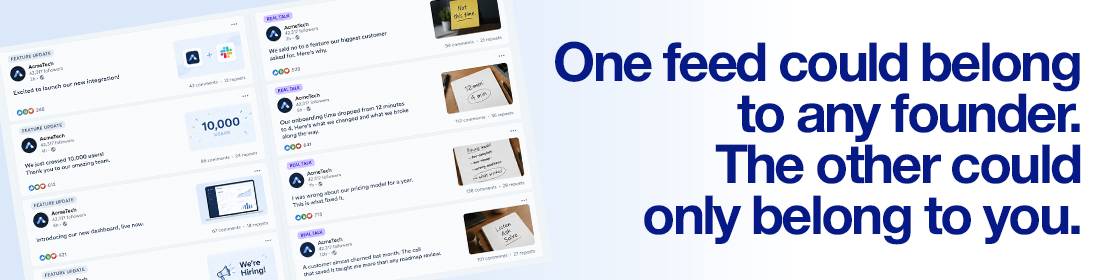
Here is the mistake I see most often. A founder treats their LinkedIn profile like a second product page. Every post is an announcement. New feature, new integration, new logo on the website. It reads like marketing because it is marketing, just without a budget behind it.
Personal branding for a SaaS founder is not thought leadership content and it is not a running list of updates. It is decision transparency. It is telling people why you built something the way you built it, what you assumed that turned out to be wrong, what a customer told you that changed the roadmap. People do not follow founders for product news. They follow founders because watching someone think through a real problem, in public, is genuinely interesting.
Talk about the problem before you talk about the product. If your software solves a scheduling headache for operations teams, spend your posts on the headache. The chaos, the manual workarounds, the three tools people stitch together because nothing quite fits. Your product becomes the natural answer instead of a pitch.
Share real numbers when you can. Not vanity numbers like follower counts, actual outcomes. A support ticket volume that dropped by a specific percentage. A customer who cut onboarding time in half. Buyers today are far more skeptical of generic claims and far more convinced by specific ones. A client of mine builds infrastructure tooling and gets noticeably more comments on posts that include one hard number than on posts without any.
Write about tradeoffs and decisions, not just wins. Why you said no to a feature request from your biggest customer. Why you chose to build something slower and more expensive because the faster option would have created technical debt you would regret. This is the content that makes people trust your judgment, which is exactly what they are buying when they buy SaaS from a small team.
Do not turn every post into a feature update. Save that for your changelog and your newsletter. If your LinkedIn feed reads like a release log, you have built a channel nobody wants to follow.
Do not post the generic SaaS founder content that could have been written by anyone, or frankly, by anything. Posts like "here are 5 lessons from scaling my startup" without a single specific detail are easy to spot now, and audiences scroll past them fast. If a post could have been generated without knowing anything about your actual business, it will perform like it was.
Do not disappear for three weeks and then post only when you have news to share. Founders who show up consistently, even with smaller posts, build more trust than founders who go quiet and resurface only for announcements. The audience needs to see you thinking regularly, not just celebrating occasionally.
One or two strong, specific posts a week works better than posting every single day. LinkedIn's own behavior has shifted toward rewarding depth over frequency, which means a thin post published daily will underperform a genuinely useful post published once or twice a week.
I would rather a founder publish two posts a week that say something real than seven filler ones.
Here is what nobody tells founders when they start this. Writing consistently, in your own voice, while also running the company, is genuinely hard to sustain past the first few weeks. That is usually the point where founders either go quiet or start posting the generic stuff I mentioned above, because generic is faster to write than specific.
This is exactly the gap our ghostwriting process at BYOB is built to close for SaaS founders. We do not write generic thought leadership and put your name on it. We sit with you, pull out the actual decisions and tradeoffs behind your product, and turn them into posts that sound like you because they are built from what you actually said. If your LinkedIn feels like it is falling into either the feature update trap or the generic advice trap, that is usually the first thing worth fixing. Book a Discovery Call and we can look at what your last ten posts are actually saying about your company.