If you manage a LinkedIn account professionally, you have felt this year's shift even if you could not name it. A post that used to reach a few thousand people now reaches a few hundred. What almost nobody has stopped to unpack is why, and whether a smaller number is actually a worse one.
We manage LinkedIn accounts across healthcare, medical sales, coaching, leadership, finance, sustainability, climate tech, construction, and personal branding, and the pattern showing up across every one of those categories tells a more specific story than "the algorithm changed."
The short version: reach fell for 80% of the client accounts we tracked year over year, while engagement rate climbed for well over 90% of those same accounts. Fewer people saw each post, but more of the people who did actually engaged with it.
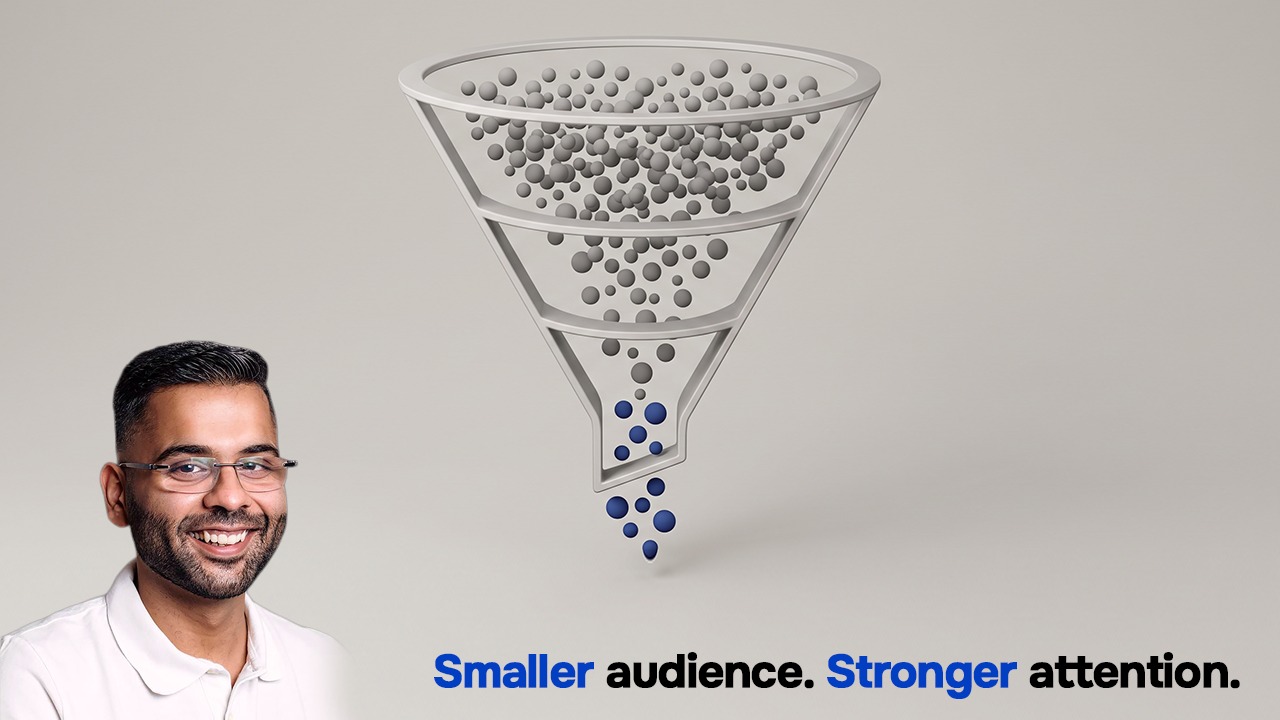
Part of why this feels confusing is that most people assume LinkedIn is trying to show a post to as many people as possible. It is not, and it never really was. A post first goes out to a small group, and how that group responds decides whether it goes further or stops there. That makes it a relevance system, not a size system, built to find the right smaller audience for a post rather than the biggest one.
A platform built that way will always look like reach is shrinking, even in years when it is just getting better at its actual job, which is filtering harder for the right person instead of the most people.
We compared year over year performance across client accounts we manage with full data available for both 2025 and 2026. Impressions declined for 80% of the accounts we looked at, and for most of them the decline sat between 24 and 35%. The steeper drops, in climate tech and construction, went as high as 82%. A coaching account fell 70%, a personal branding account fell 51%.
At the same time, engagement rate increased for well over 90% of those same accounts. The account with the steepest impression decline still saw its engagement rate climb from 1.80 to 2.52%. Another, down 51% in reach, moved from 1.93 to 2.55%. In healthcare and medical sales we saw the same shape, lower impressions per post, but engagement rates still climbing, with one account moving from 3.92 all the way to 4.98%. If reach were the only number that mattered, every one of these accounts would look like it was failing. Almost none of them were.
A handful of accounts did see impressions go up this year, one in healthcare, one in coaching, one in finance and sustainability, and it would be easy to point to those as proof that some accounts had cracked the algorithm. When we looked closer, the growth in each case came from one or two unusually successful posts rather than a steady climb, and a single viral post can flatten a whole year of comparison while also pulling in a broader, less invested audience. That is likely why the coaching account with the biggest reach gain actually saw its engagement rate fall, from 4.55 down to 3.71%.
More reach does not automatically mean more relevance, and less reach does not automatically mean less value, which is the part of this that is easy to say and hard to actually sit with when your own numbers are the ones dropping.
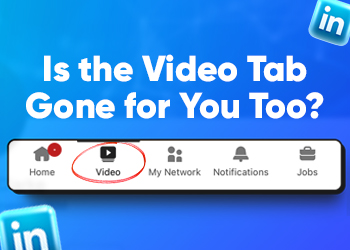
One format note that held across every single client account, in every industry, with no exceptions: video was the weakest performing format we saw. LinkedIn has been pushing video as the format worth leaning into, and our data has not agreed with that once.
Our client data would be a coincidence if it were not backed by what is happening platform wide. Independent research on LinkedIn's algorithm this year found views down 50% year over year, engagement down 25%, and follower growth down 59%. If your own numbers have followed that shape, the honest read is that you did not do anything wrong, the platform moved under everyone at once.
The likely driver is volume. A study of over a million LinkedIn posts found that 41% of long form content on the platform is now fully AI generated, the highest share of any social network measured.
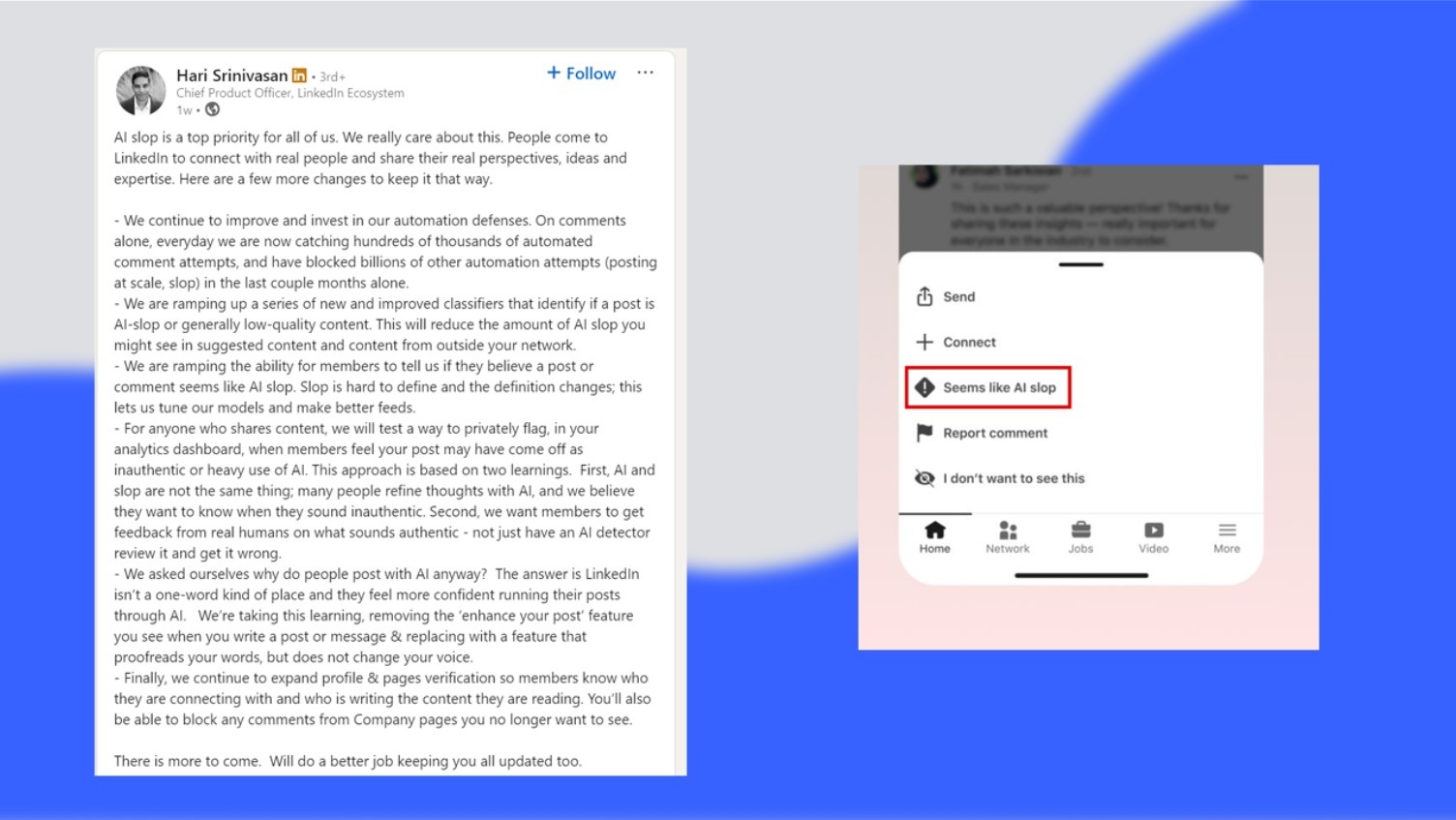
Put the two facts side by side and the shape gets clearer: the dramatic opening line, the one sentence paragraphs, the three lessons nobody asked for, the "it's not X, it's Y" structure, a vague story about resilience with none of the specific detail that would let you actually picture it happening. It reads as grammatically perfect and completely forgettable, at scale, across a huge share of the feed. LinkedIn has started rolling out, still early, a way for people to flag a post for sounding like AI, and we take that as a signal, even an early one, that the platform is starting to notice the flood and starting to push back against it.
None of this is LinkedIn confirming anything outright, and a few months of testing on our end cannot prove it either. But a feed absorbing that much templated content, at the same time it is giving people new tools to flag what feels synthetic, does not need a conspiracy to explain why distribution is getting stricter. It only needs enough sameness for the system to start telling the difference.
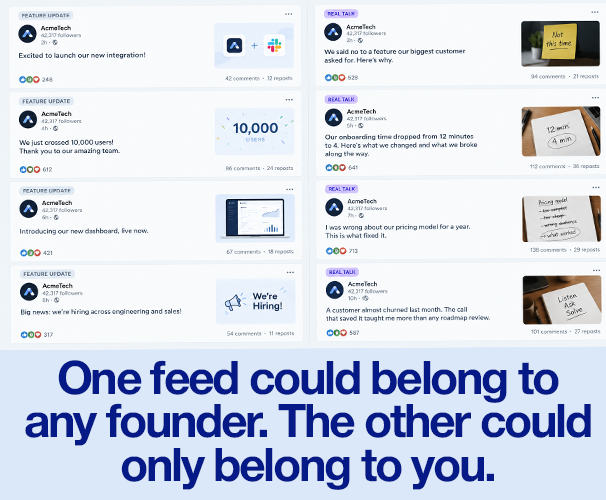
From May through July we ran a real test across our managed accounts. Instead of shaping every post to perform well against the algorithm, we wrote the way people wrote before AI tools became part of the default workflow: longer paragraphs, fewer hooks built purely to stop a scroll, less formatting for formatting's sake, bullet points only where the thought genuinely needed breaking apart. Mostly, more room for an actual story pulled from something that really happened to someone.
On a healthcare and surgical sales account, that meant writing from real moments the leadership and sales team had lived through, rather than another generic post about innovation that could have belonged to any company in the space. That kind of detail carries weight because nobody could have pulled it out of a prompt, it only existed because someone actually lived it. Same logic applied everywhere else we tried it. A leadership coach had an actual difficult client conversation to draw from. A climate tech founder had a real project that didn't go to plan. A finance professional had a real opinion shaped by one real conversation with one real investor.
That's the kind of material that sticks with people, not because it was engineered to, but because nobody else could have written it.
A lower impressions count this year doesn't automatically mean you're doing something wrong. Look past that number toward what's actually coming back: the comments with real thought in them, the profile visits, the DMs, the event invites, the podcast asks, the investor conversations, the person who mentions your post to you months after you wrote it. Most of what a LinkedIn presence is worth right now doesn't live on the analytics tab. It shows up as someone telling you they read what you wrote, or a warm introduction from a peer, or a reply from someone who would have ignored a cold message from you entirely.
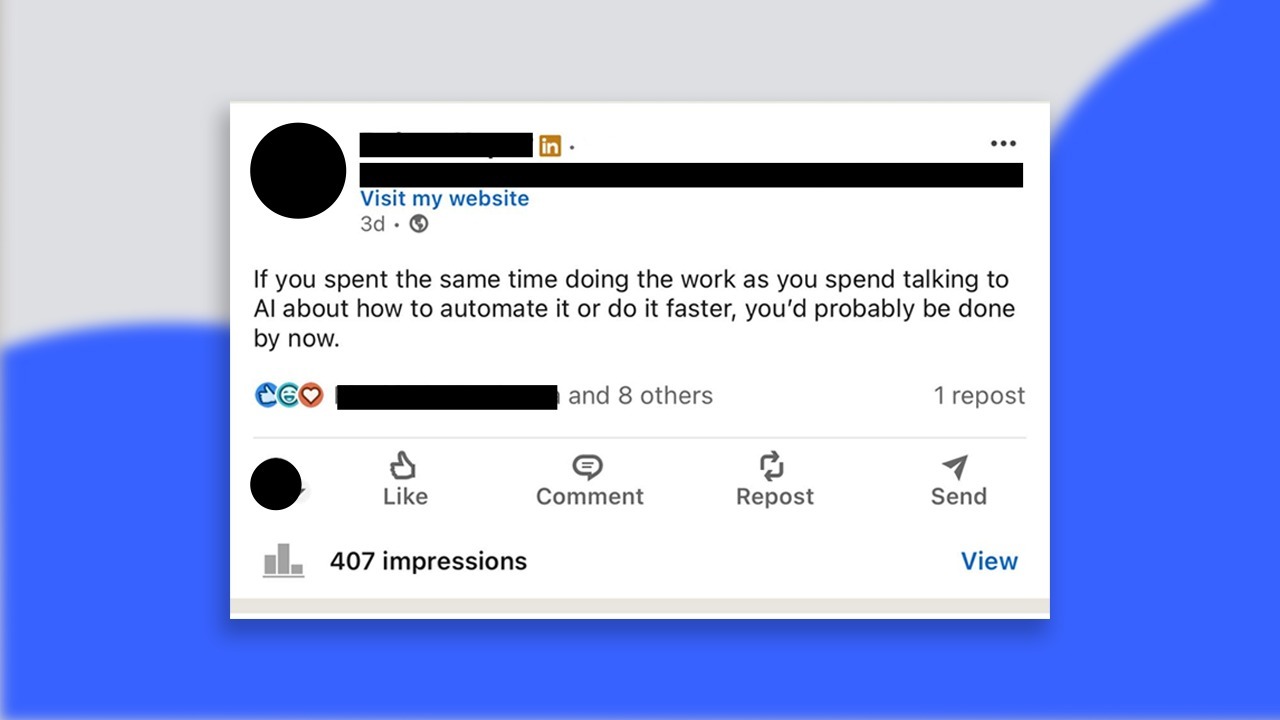
Proof of that from our own account: my last month’s post was a small, unpolished thought about consistency, nothing built for performance, and it pulled just 692 impressions. It brought in a new client this week regardless, because the algorithm doesn't need to put a post in front of everyone for it to work. It just needs to put it in front of the one person who was already quietly deciding to trust you.
So write the thing for the one reader you actually want, not for a system you're only ever guessing at. Draft it somewhere quiet, the way you used to before there was a formula for this. Leave in the detail that feels a little too specific to post. Don't smooth away every rough edge just because it would read cleaner without them. And on the days the writing doesn't come, don't hand your voice off to something else just because the calendar says it's your day to post. The most useful thing you can do on LinkedIn right now might just be sounding like an actual person again.