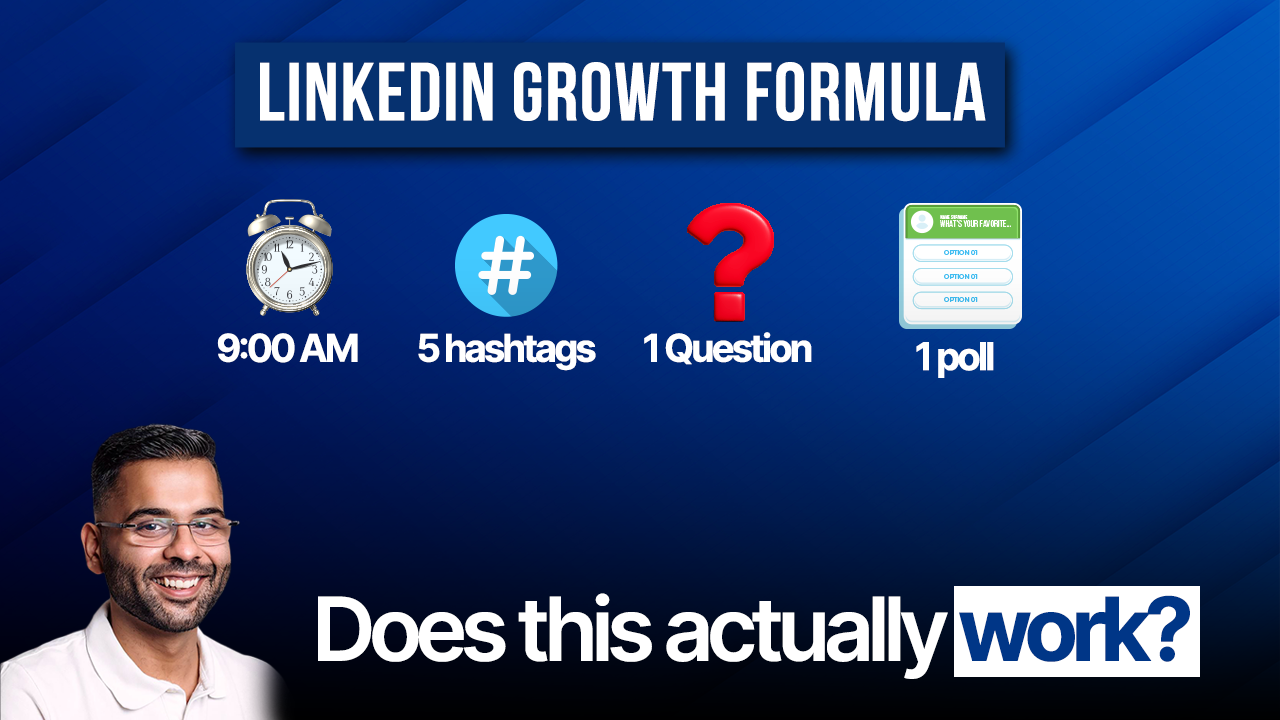
Every few months someone on LinkedIn posts a version of the same question: why did my reach fall off a cliff? The replies are always the same folk remedies: post at 9am, use five hashtags, end with a question, run a poll. Most of it gets repeated so often it's treated as settled fact. Almost none of it is.
I went through the actual research - platform analyses, a peer-reviewed study, and LinkedIn's own engineering papers, to see which of these "rules" survive contact with real data. Some do. Most don't, and a few are actively working against the people following them.
So do hashtags, posting time, and polls actually help your LinkedIn reach? Mostly no, and in the case of polls, the opposite. Here is what the research actually shows for each one.
Before the specifics, one definition matters more than any tactic: impressions are how many times your post loaded on someone's screen, whether they read a word of it or not. Dwell time is how long someone actually stayed on it. LinkedIn's ranking system, a large model internally called 360Brew, described in the platform's own October 2025 engineering paper, leans heavily on dwell time and comment quality as its read on whether a post is genuinely good, not just glanced at.
Most "best practices" people repeat are optimized for the first metric. The algorithm is optimized for the second. That mismatch explains a lot of the confusion.
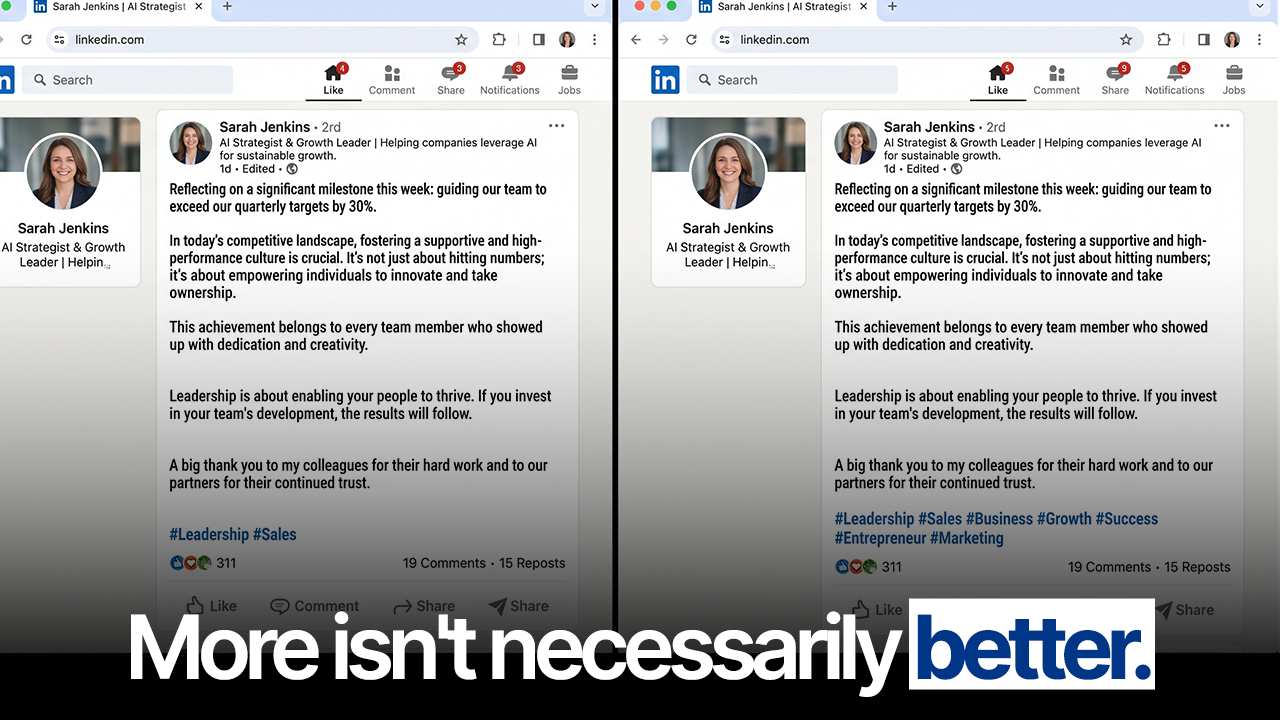
The most confident claim on LinkedIn right now is that hashtags are useless. A widely shared 2026 algorithm report backs that up directionally - hashtags no longer drive discovery, because the ranking system now reads the text of your post itself to categorize it.
But "don't drive discovery" isn't the same as "do nothing." A large 2026 platform study covering over 670,000 posts found that posts using at least one hashtag still earned meaningfully more impressions and interactions than posts using none, and a separate peer-reviewed study of LinkedIn posts found tags and hashtags were statistically significant predictors of higher reactions.
The catch: both studies agree the benefit shows up at one to three hashtags, while the average account is stacking six or seven. So the honest version isn't "hashtags are dead," it's "hashtags stopped being a discovery tool and became a small, easily-overused seasoning."
This one isn't a myth exactly. Surveys do show posting windows correlate with engagement, and late-morning weekday posting outperforms weekends on average. The problem is how much weight people put on it relative to everything else. Timing shifts when a post gets its first look. It does nothing for whether the post is worth looking at. Treating "the right hour" as a lever on par with what you're actually saying is a classic case of optimizing the variable that's easy to control instead of the one that matters.
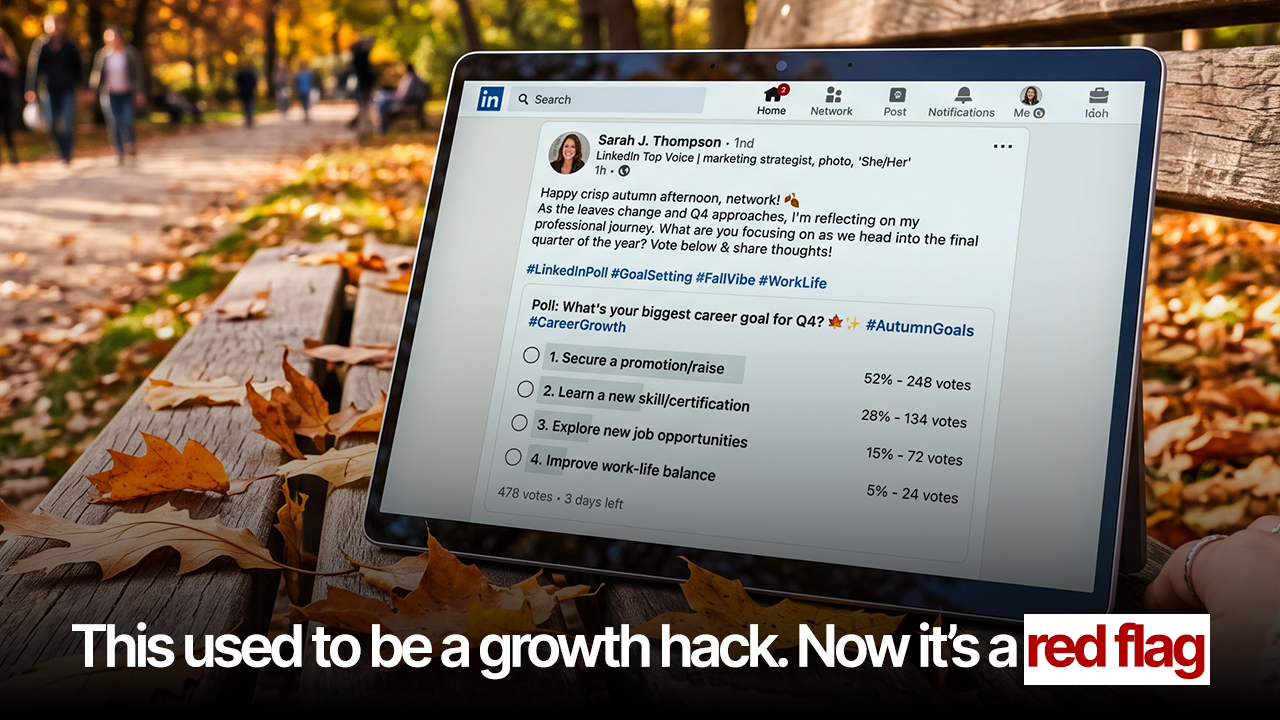
This is the clearest reversal. Polls used to be a reliable reach hack. Since LinkedIn's 2026 "Authenticity Update," multiple analysts have reported poll engagement collapsing to near-zero, and the platform's own documentation now describes engagement-bait formats: "comment YES if you agree," reflexive questions tacked onto the end of a post, as a pattern the system actively down-ranks, not just ignores. The mechanism makes sense once you know what the algorithm is actually measuring: a one-click poll vote or a low-effort "totally agree!" comment produces zero dwell time and no real signal of quality.
What used to read as engagement now reads as noise, and the system has gotten good at telling the difference.
Across every credible study I looked at, the same few things show up as real predictors, not folk wisdom:
None of this is a hack. It's closer to the opposite: the algorithm has quietly gotten better at rewarding the same thing a good editor always looked for - is this actually worth someone's time, or is it just occupying space in a feed.
That's a harder standard to hit consistently than "post at 10am with three hashtags and a poll," which is probably why the folklore persists. It's easier to follow than it is to write something genuinely worth stopping for. It's also, not coincidentally, the whole job we do at BYOB: building content that earns dwell time on its own terms, week after week, instead of chasing whatever tactic is circulating that month.