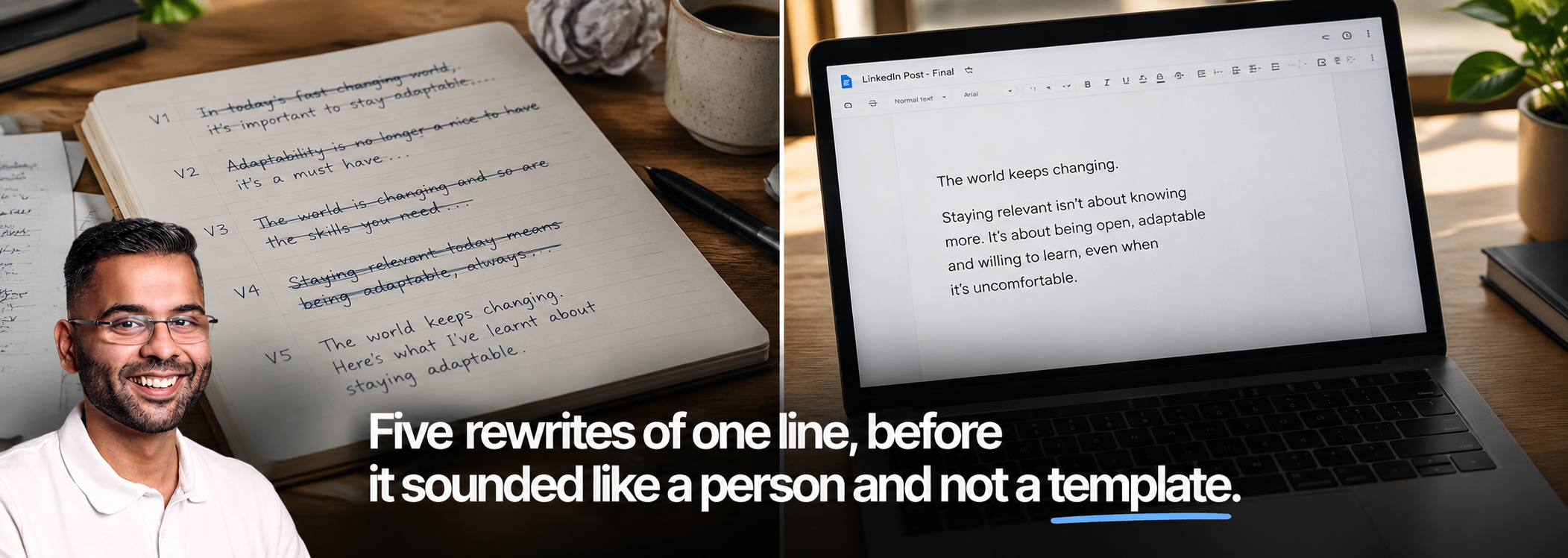
People assume writing a LinkedIn post takes ten minutes. Pull up a doc, type it out, hit publish. On the accounts we manage, one post usually takes closer to an hour, and almost none of that hour is spent typing. Most of it goes into a call to understand how someone actually talks, notes on what they meant versus what they said out loud, and five or six rewrites of the opening line alone.
A few weeks into working with one client, I got a message that has stuck with me since. "These are really sounding more and more like how I communicate. It's a nice job." That sentence is the entire point of the work. And it took nearly an hour to write the post that earned it.
That hour is not spent generating sentences. It is spent getting one thing right before moving to the next. A call to hear how someone actually speaks, not how I would write it myself. Notes on what they meant, separate from what they said out loud. Then a first line that gets rewritten five or six times, because everything after it depends on whether that opening sounds real or rehearsed.
The order matters more than people expect. It usually looks like this.
First, a call, not a form. A short questionnaire tells you what someone thinks about a topic. It does not tell you how they pause, what they repeat when they feel strongly about something, or which phrases they would never use out loud. That only comes through talking to them directly.
Second, separating what someone said from what they meant. Founders talk in half finished thoughts a lot of the time. Part of the work is catching the idea underneath the sentence, not just transcribing the sentence itself.
Third, the opening line gets tested against everything else. If it does not sound like the person by the second sentence, the whole post gets rebuilt from that point, not lightly edited around it.
None of this shows up in the final post. That is the point. The reader is only ever supposed to notice the voice, never the process behind it.
If anything, it makes it more necessary. So much of what people read online now is generated that sounding recognizably human takes more deliberate effort, not less. The bar for spotting obviously AI written content has dropped, which means the bar for actually standing out has gone up. Anyone can produce a grammatically correct LinkedIn post in thirty seconds now. That was never the hard part. The hard part was never the words. It was always the specificity, the small verbal habits, the things a person would actually say instead of the safest possible version of what they might say.
I still write the way people wrote before ChatGPT existed, because that is the one thing a reader can tell apart, even when they cannot explain exactly how. They just sense that a post is real, or that it is not, and they trust the ones that feel real a little more.
A post that took under an hour to write and reads as effortless is usually proof that real editing happened. Not that none did.
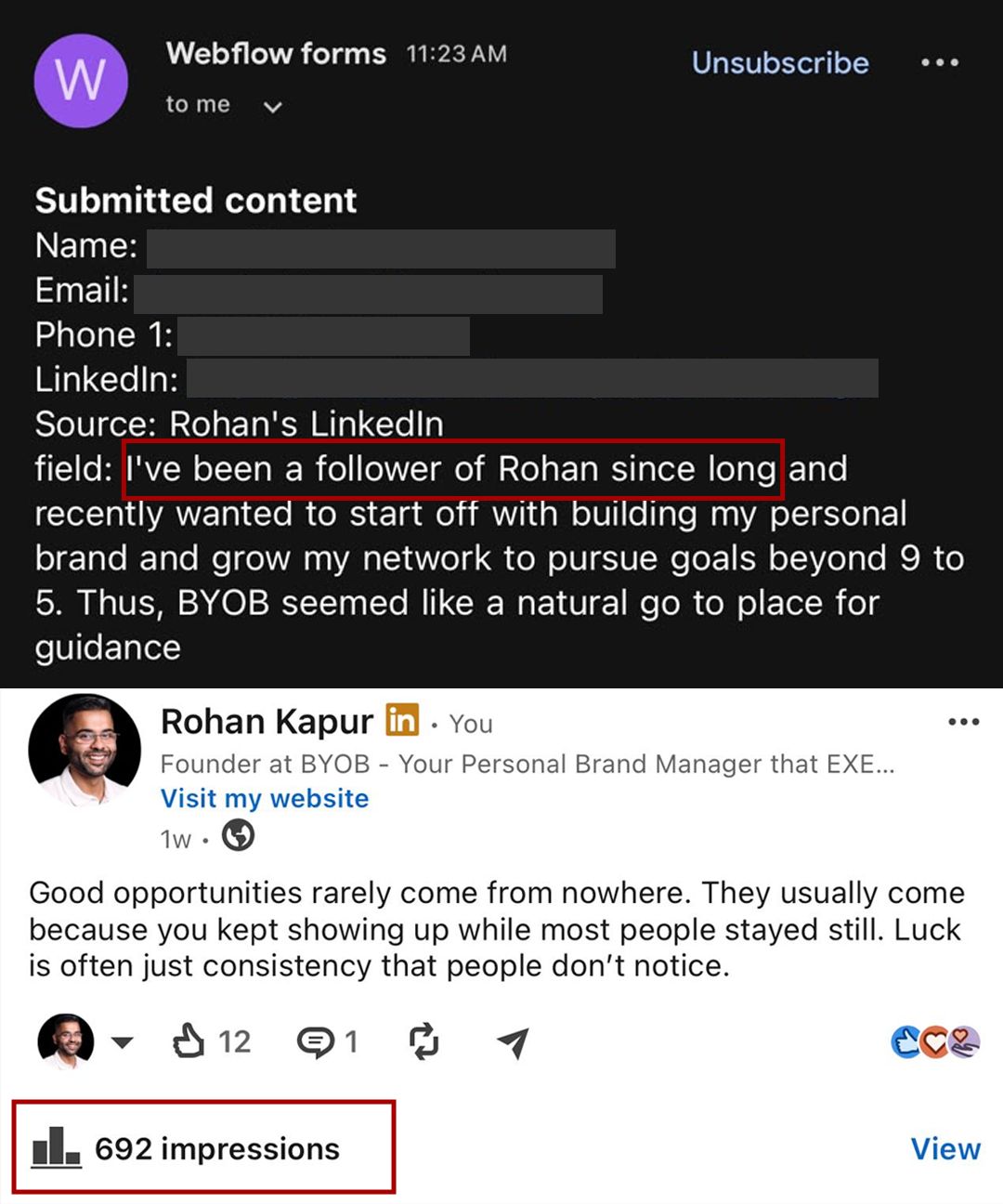
Yes, and my own least flashy post is the clearest proof of that. It pulled just 692 impressions, a number most people would call unimpressive, and it still led to a client conversation the following week. No viral hook, no engagement bait, just the same restraint and the same invisible editing I put into every client post. The reach was small. The post still did its job, because the work behind it was never about reach. It was about sounding like one specific person and nobody else.
Reach is the metric everyone chases and the one that matters the least here. A post with modest numbers that sounds exactly like the person who supposedly wrote it will outperform a post with better reach that sounds like nobody in particular, every time it counts.
If a post reads simple, that is usually the sign that real work went into it. That is why we spend an hour on a post most people assume takes ten minutes, on every account we manage, every single time. If you would rather have that hour spent on your account than on your calendar, let's talk.


.png)