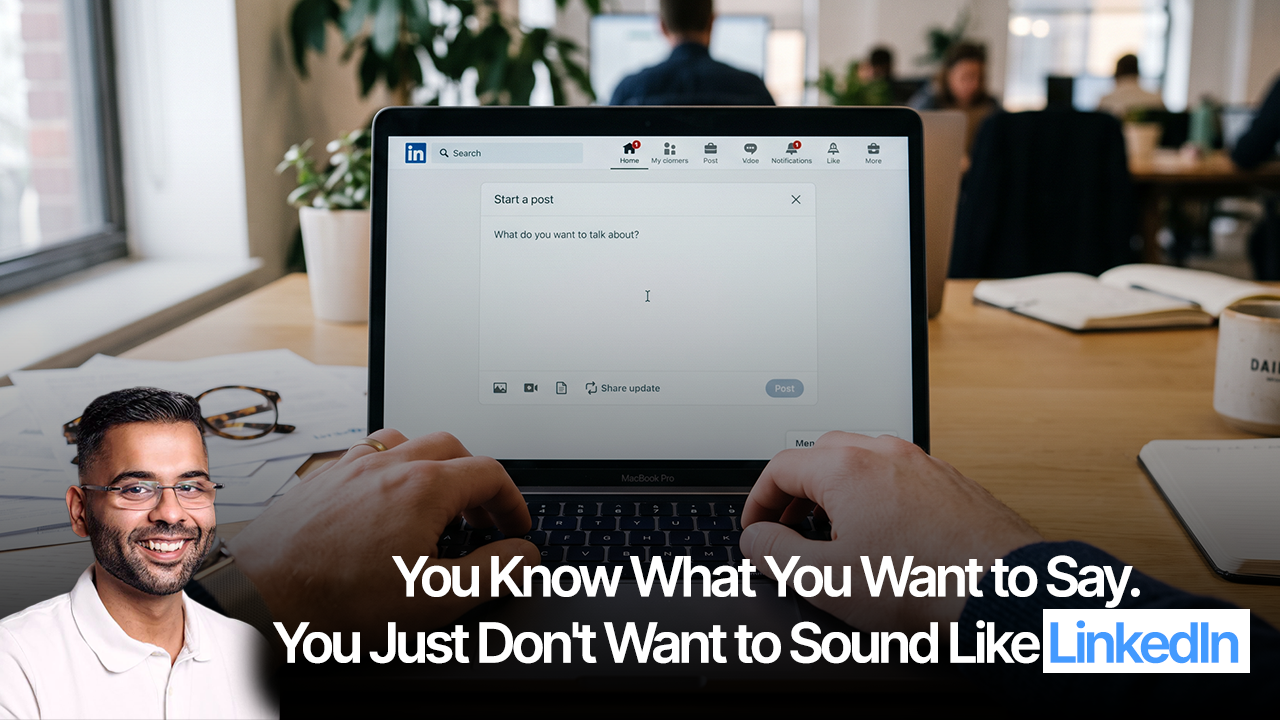
I read a thread on r/LinkedIn recently that asked a simple question: does staying quiet on LinkedIn actually hurt your career? The replies split almost evenly. Half said post consistently or stay invisible to recruiters. The other half said posting makes you look fake. Buried in the middle was a comment from someone who screens candidates for a living, and it cut straight to the real issue: the problem isn't whether to post. It's that most people don't know how to talk about their own work without sounding like they're performing.
That's the gap I want to talk about, because I think it's misdiagnosed almost everywhere it comes up.
Most people who freeze aren't lacking confidence, they're avoiding a specific kind of content they've learned to recognize and dislike. The freeze is a taste problem, not a confidence problem, and the two need completely different fixes.
Most advice about LinkedIn hesitation treats it like a confidence problem -"just post, nobody's watching as closely as you think." I'd push back on that. The hesitation is usually a taste problem, not a confidence problem. People who freeze before posting have usually read enough bad LinkedIn content to know exactly what they're afraid of becoming: the "I'm humbled and honored to announce" post, the manufactured vulnerability, the achievement dressed up as a lesson. They're not scared of visibility. They're scared of sounding like everyone else who's visible.
That distinction matters, because it means the fix isn't "post more and get over it." The fix is separating what you write from how it reads. Those are two different skills, and almost nobody is naturally good at both.

A majority of recruiters use LinkedIn as part of how they evaluate candidates, and rate LinkedIn-sourced hires as generally higher quality than hires sourced elsewhere.
That's the part that turns this from a personal discomfort into a business problem. For a founder or executive, the audience isn't just recruiters, it's investors, prospective clients, and future hires all doing the same quiet background check before a call. An empty or dormant profile doesn't read as humble. It reads as absent.
So the actual choice isn't "post and risk looking like a try-hard" versus "stay quiet and stay safe." It's "be visible in a way that sounds like you" versus "be invisible where the people evaluating you are already looking."
If you search "how to post on LinkedIn without sounding cringe," you'll get some version of: be authentic, tell a story, don't overthink it. It's not wrong, exactly. It's just useless to someone staring at a blank text box, because "be authentic" isn't an instruction, it's the result you get after someone has already found their voice on the page. Nobody hands a first-time writer "just be authentic" and expects a good first draft.
What actually separates a post that reads as genuine from one that reads as performance usually comes down to three mechanical things, not a mindset shift:
None of these are about confidence. They're craft problems. And craft problems are solvable without the person doing the writing themselves.
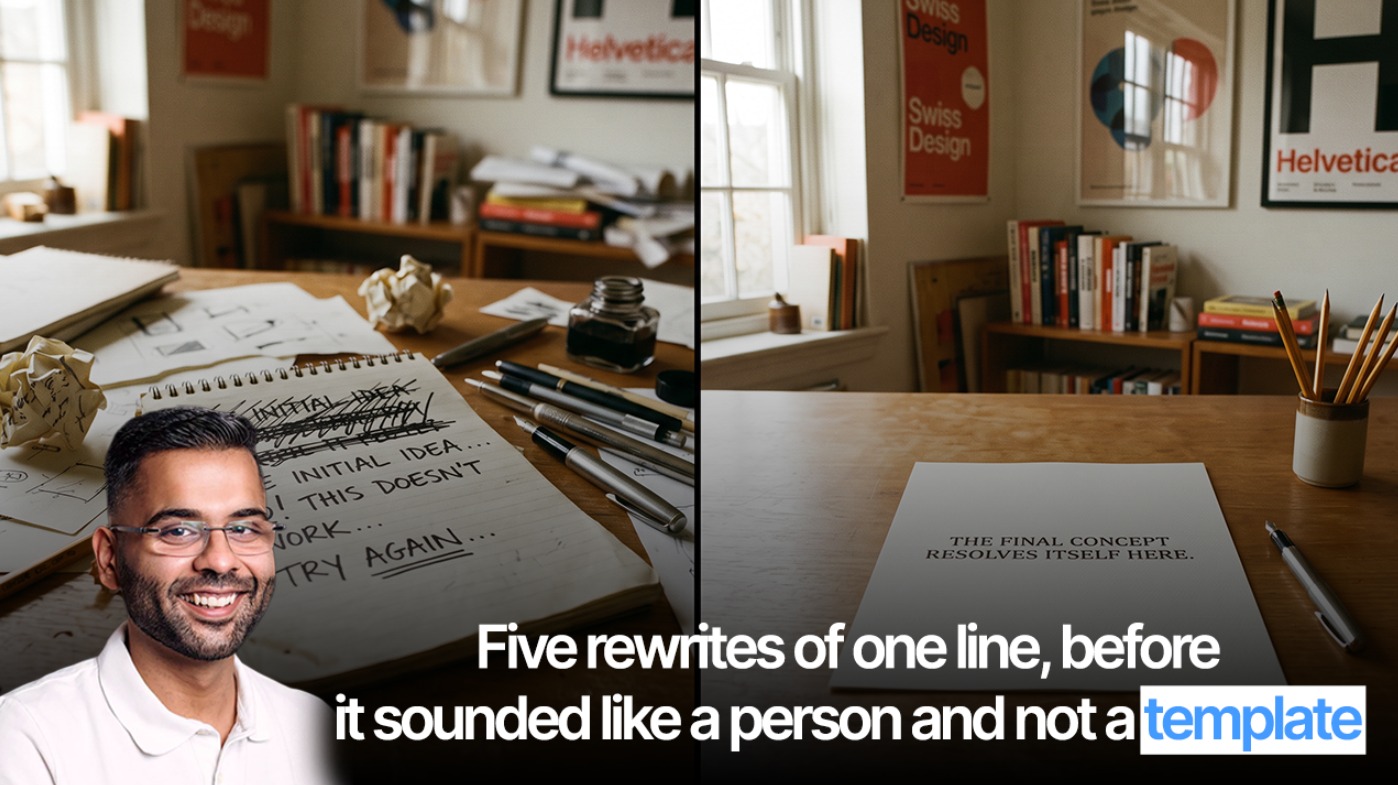
Once you see it this way, the solution stops being "build confidence" and starts being much more specific: someone needs to sit with how a person actually talks. What they're genuinely opinionated about, which stories they tell at dinner but never think to write down, and turn that into something worth publishing, in their rhythm, not a template with their name swapped in.
That's a narrower skill than "personal branding," and it's not one most people need to build for themselves. A good editor, a co-founder who's a sharp writer, or someone who does this professionally can all close the gap. The point is that the block usually isn't a discipline issue, it's a missing translation step between what someone knows and how it reads on a page.
If a post has been sitting half-written in a tab for three weeks, that's not laziness. It's a sign the voice-to-page translation is missing, and that's a much faster fix than most people expect once it's named correctly. It's also, incidentally, exactly the problem we spend our days solving at BYOB. We sit with founders and execs until we've found their actual voice, then writing in it consistently enough that LinkedIn stops being a source of guilt. If that's the gap you've been stuck on, let's talk.


.png)


